What Do the Numbers Stamped on a Compressed Gas Cylinder Mean?

The numbers stamped on a compressed gas cylinder give you a lot of useful information. Typical stamps look something like this:

DOT3AA-2265

12345

4-99

3-09

2-19

The first line is the DOT Specification (DOT3AA). That tells you it is a seamless alloy steel cylinder. Other common DOT specifications include:

Administrative Controls in Laboratories and Pilot Plants: When Might They Be an Acceptable Safety Measure?

The accepted hierarchy of controls[1],[2],[3] is:

1.      Elimination

2.      Substitution

3.      Engineering Controls

4.      Administrative Controls

5.      PPE

In research, there is often a strong desire from management, professionals and operators to use administrative controls in place of engineering controls. Administrative controls are usually less expensive, faster, and easier to implement. They allow greater flexibility in the response to an issue which can be desirable when the causes or consequences of the issue or the probability of it occurring are less than clear to the organization. Administrative controls avoid having to set a predetermined and fixed response in advance of the actual issue. They can often be developed to allow a graduated or measured response based on the situation and risk. Engineering controls require a fixed definition, in advance, such as is required for an automated interlock system. The concern and the mitigative measure must be fixed for the engineering control to be designed.  Usually many administrative controls are incorporated into the equipment or unit’s operating procedures. Others become part of site wide procedures such as work permits.

“We Need to Get Going On This Project”: Issues with Starting Research Projects too Early

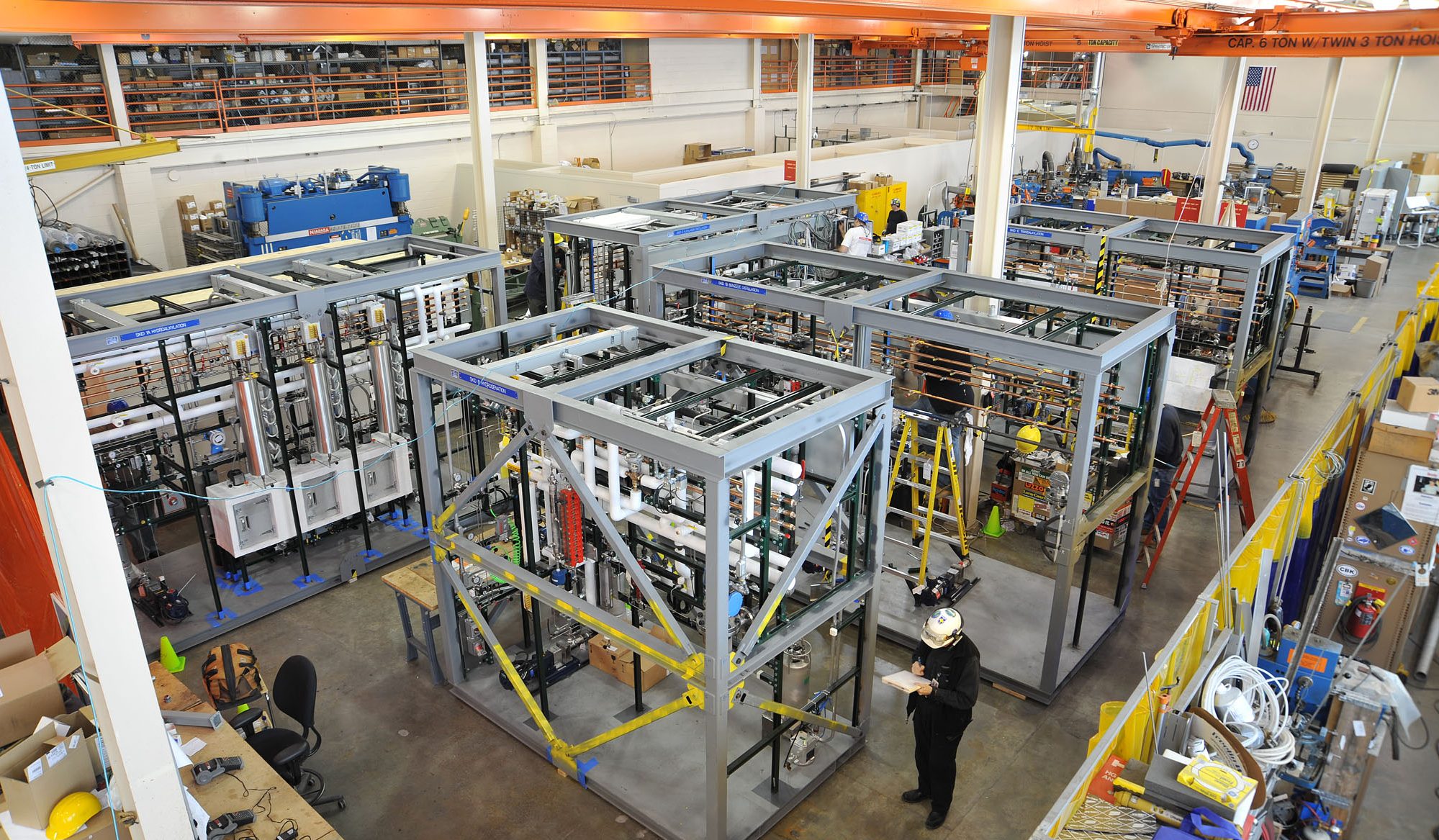
Someone, somewhere, at some time must have been told that there was no rush in getting a research project whether a pilot plant or laboratory renovation or construction complete. Sadly, I was never one of these lucky individuals. It always seems that almost any research project is under significant pressure to finish sooner than later. And this invariably leads to a desire to get started on doing something as soon as possible to make some progress.

On many projects, there is a strong tendency to start doing something – anything – before the design work is complete. This approach, in my opinion and experience, is strongly counterproductive but also unfortunately counterintuitive. Starting any work, in most circumstances, before the design work is essentially complete only ensures that you will incur extra costs, needless rework, potential safety issues, and not finish any sooner if not later. Pretty strong words. But backed up by my experience.
What is the Maximum Allowable Quantity (MAQ) of Hazardous Materials Allowed by Code in a Laboratory or Pilot Plant Area?

We live in a world of acronyms and abbreviations many of which, at least in text messages, defy the author’s interpretation. A common one in pilot plant and laboratory operations is the maximum allowable quantity or MAQ. This is the maximum amount of hazardous materials that are allowed in a building by the building code. If you exceed the MAQ you are (1) unsafe and (2) likely to receive a costly public citation for violating the fire code. The fire department can, in some circumstances, require you to shut down your operations until the problem is corrected.

Should You Air Condition a Pilot Plant Space?

Unless you live in Hawaii or parts of California, the question always arises should you air condition your pilot plant space. While whole generations of pilot plant operators have always given a resounding yes answer, few organizations have been willing to spend the capital and operating costs just for just personal comfort. Capital costs to install air conditioning runs about $15-25/SF as you need to add a coil, chiller, pump, piping, and insulation. For a 3,000 SF pilot plant bay – a not uncommon size – that suggests a $45,000 to $75,000 capital outlay. Worse depending on your exhaust rate, climate, cooling season, and power costs you can spend $35,000-$75,000 annually to operate the system. These figures are large enough to give any organization a reason to pause.

Can I Have an Electrical Outlet in a Hood?

NFPA-45 Fire Protection for Laboratories Using Chemicals is very clear that if you have an electrical outlet in a hood then you need another disconnect within 50 ft of the hood.

7.8.4.1 In installations where services and controls are within the hood, additional electrical disconnects shall be located within 15 m (50 ft) of the hood and shall be accessible and clearly marked.

7.8.4.2 If electrical receptacles are located external to the hood, no additional electrical disconnect shall be required.

The disconnect can be a switch, a circuit breaker, or even a plug. So a plug strip inside the hood plugged into an outlet outside the hood is legal.

What Is A Good Definition Of A Pilot Plant?

I must get asked that question a dozen times each year. Most times it is from someone outside the chemical industry who has never heard it before asking me what I do. (Or who wanted to know what my license plate PLTPT stands for.) Less often but more challenging it is from a client who is struggling to decide if a code, standard, or recommended practice applies to their research equipment. You would think it would be easy to explain. Here are a few easily found definitions:

Venting Gas Cylinders in a Laboratory

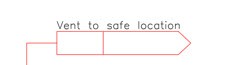
NFPA 55 Compressed Gases and Cryogenic Fluids Code does not really tell you where hazardous gases should vent in a laboratory or a pilot plant.

7.3.1.5 Vent Pipe Termination.

7.3.1.5.1 Venting of gases shall be directed to an approved location.

Approved in this sense means someone (usually the local authority having jurisdiction (AHJ) agreeing it is a safe location. But few, if any, AHJ’s want to be involved in these small operational issues. NFPA 55 does give some more guidance:

Tips for Troubleshooting Pilot Plant and Laboratory Equipment

Troubleshooting is a tedious and time consuming operation. Often one hears that X is ‘a good troubleshooter” or has “good troubleshooting skills” almost as if these are innate qualities one must be born with. Nothing could be less true. Troubleshooting is a skill anyone can learn and improve at as long as they understand some simple basic principles. While troubleshooting skills are similar across many fields and activities, I am going to focus on those most useful in a research environment (laboratory to pilot plant to demonstration unit scales) since that is where my interests and experience reside.

Restarting A Laboratory After an Unexpected Shutdown

COVID19 caught almost all laboratories by surprise and led to their being shut down rather suddenly for extended periods. There is a lot of discussion as to when laboratories (and everything else) can safely reopen and more discussion about appropriate protective measures. A topic that often is overlooked or only casually addressed is the other, non- COVID19 potential hazards. In my 45 years I have only experienced a few sudden laboratory shutdowns usually due to a power or ventilation failure that took much longer than expected to correct. I have however, seen the results of sudden down sizings which resulted in many laboratories simply losing their workers without any real effort to render them safe. Eventually, these laboratories usually were either returned to service on the next economic upswing or at least rendered safe and properly decommissioned. The learnings from these experiences suggests the following issues that restart up plans should carefully address.